
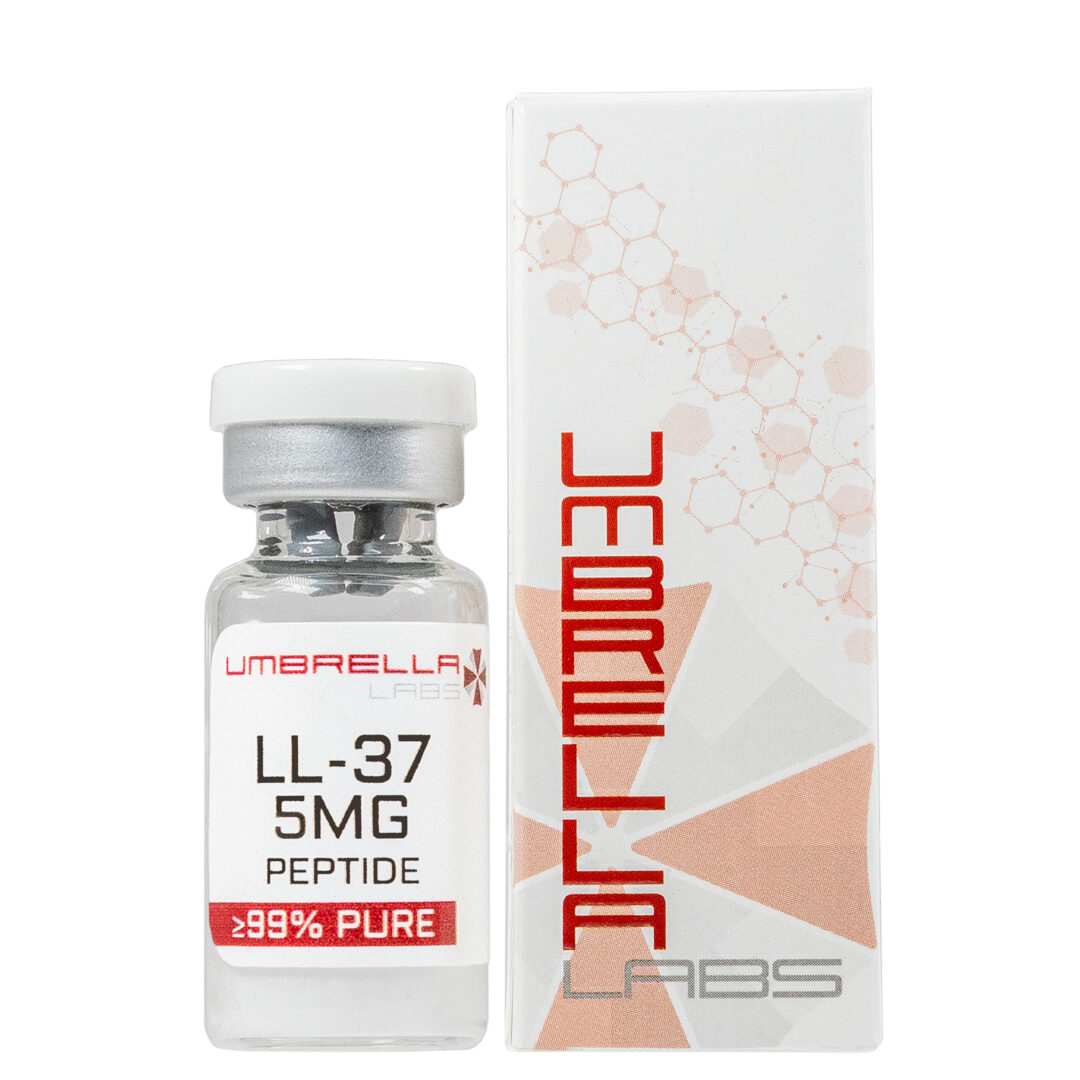
LL-37 Peptide 2mg / 5mg Vial – Antimicrobial & Immune Research Peptide
What is LL-37 Peptide?
LL-37 Peptide is a naturally occurring antimicrobial peptide (AMP) derived from the human immune system. It belongs to the cathelicidin family and plays an important role in the body’s innate immune defense mechanisms. Researchers study LL-37 for its potential involvement in immune response, inflammation regulation, and tissue repair signaling.
| CAS Number | 154947-66-7 |
| Other Names | Antibacterial protein LL-37, Cathelicidin LL 37, GTPL5527, |
| IUPAC Name | (4S)-5-[[(2S)-6-amino-1-[[(2S,3S)-1-[[2-[[(2S)-6-amino-1-[[(2S)-1-[[(2S)-1-[[(2S)-6-amino-1-[[(2S)-1-[[(2S,3S)-1-[[(2S)-1-[[(2S)-5-amino-1-[[(2S)-1-[[(2S,3S)-1-[[(2S)-6-amino-1-[[(2S)-1-[[(2S)-1-[[(2S)-1-[[(2S)-1-[[(2S)-4-amino-1-[[(2S)-1-[[(2S)-1-[(2S)-2-[[(2S)-1-[[(2S,3R)-1-[[(2S)-4-carboxy-1-[[(1S)-1-carboxy-2-hydroxyethyl]amino]-1-oxobutan-2-yl]amino]-3-hydroxy-1-oxobutan-2-yl]amino]-5-(diaminomethylideneamino)-1-oxopentan-2-yl]carbamoyl]pyrrolidin-1-yl]-3-methyl-1-oxobutan-2-yl]amino]-4-methyl-1-oxopentan-2-yl]amino]-1,4-dioxobutan-2-yl]amino]-5-(diaminomethylideneamino)-1-oxopentan-2-yl]amino]-4-methyl-1-oxopentan-2-yl]amino]-1-oxo-3-phenylpropan-2-yl]amino]-3-carboxy-1-oxopropan-2-yl]amino]-1-oxohexan-2-yl]amino]-3-methyl-1-oxopentan-2-yl]amino]-5-(diaminomethylideneamino)-1-oxopentan-2-yl]amino]-1,5-dioxopentan-2-yl]amino]-3-methyl-1-oxobutan-2-yl]amino]-3-methyl-1-oxopentan-2-yl]amino]-5-(diaminomethylideneamino)-1-oxopentan-2-yl]amino]-1-oxohexan-2-yl]amino]-1-oxo-3-phenylpropan-2-yl]amino]-4-carboxy-1-oxobutan-2-yl]amino]-1-oxohexan-2-yl]amino]-2-oxoethyl]amino]-3-methyl-1-oxopentan-2-yl]amino]-1-oxohexan-2-yl]amino]-4-[[(2S)-6-amino-2-[[(2S)-2-[[(2S)-6-amino-2-[[(2S)-2-[[(2S)-2-[[(2S)-2-[[(2S)-2-[[2-[[(2S)-2-[[(2S)-2-amino-4-methylpentanoyl]amino]-4-methylpentanoyl]amino]acetyl]amino]-3-carboxypropanoyl]amino]-3-phenylpropanoyl]amino]-3-phenylpropanoyl]amino]-5-(diaminomethylideneamino)pentanoyl]amino]hexanoyl]amino]-3-hydroxypropanoyl]amino]hexanoyl]amino]-5-oxopentanoic acid |
| Molecular Formula | C₂₀₅H₃₄₀N₆₀O₅₃ |
| Molecular Weight | 4493.28 |
| Purity | ≥99% Pure (LC-MS) |
| Liquid Availability | N/A |
| Powder Availability | 5 milligrams vial, 2 milligrams vial (lyophilized/freeze-dried) |
| Storage Condition | Store cold, keep refrigerated. Do NOT freeze. |
| Terms | All products are for laboratory developmental research USE ONLY. Products are not for human consumption. |
Available in 2mg and 5mg vials, LL-37 is commonly used in laboratory settings to explore how antimicrobial peptides interact with pathogens, immune cells, and cellular healing pathways. Its unique ability to influence immune signaling and microbial defense mechanisms has made LL-37 an important compound in scientific studies focused on host defense and cellular protection.
Potential Research Applications
Antimicrobial Activity Research
Scientists frequently examine LL-37 to understand how antimicrobial peptides interact with bacteria, viruses, and other microorganisms.
Immune System Studies
LL-37 is widely studied for its role in immune modulation and inflammatory response signaling.
Tissue Repair and Regeneration Research
Researchers also investigate LL-37 in experimental models related to wound healing and cellular regeneration pathways.
Storage and Handling
Store the lyophilized peptide in a cool, dry environment away from direct light. After reconstitution with sterile laboratory-grade solvent, keep refrigerated at 2–8°C and avoid repeated freeze–thaw cycles.
Frequently Asked Questions (FAQ)
What is LL-37 Peptide used for?
LL-37 is primarily used in antimicrobial, immune system, and tissue regeneration research.
What vial sizes are available?
LL-37 Peptide is commonly available in 2mg and 5mg vials for laboratory research applications.
How should LL-37 Peptide be stored?
After reconstitution, the peptide should be stored refrigerated between 2–8°C and handled with proper sterile laboratory procedures.
Is LL-37 Peptide approved for human use?
No. LL-37 Peptide is intended strictly for laboratory research purposes and is not approved for human consumption.
| Quantity | 2 Milligrams, 5 Milligrams |
|---|
Be the first to review “LL-37 Peptide 2mg / 5mg Vial”
Related products
Umbrella Labs
Umbrella Labs
Umbrella Labs
Umbrella Labs
Reviews
There are no reviews yet.