
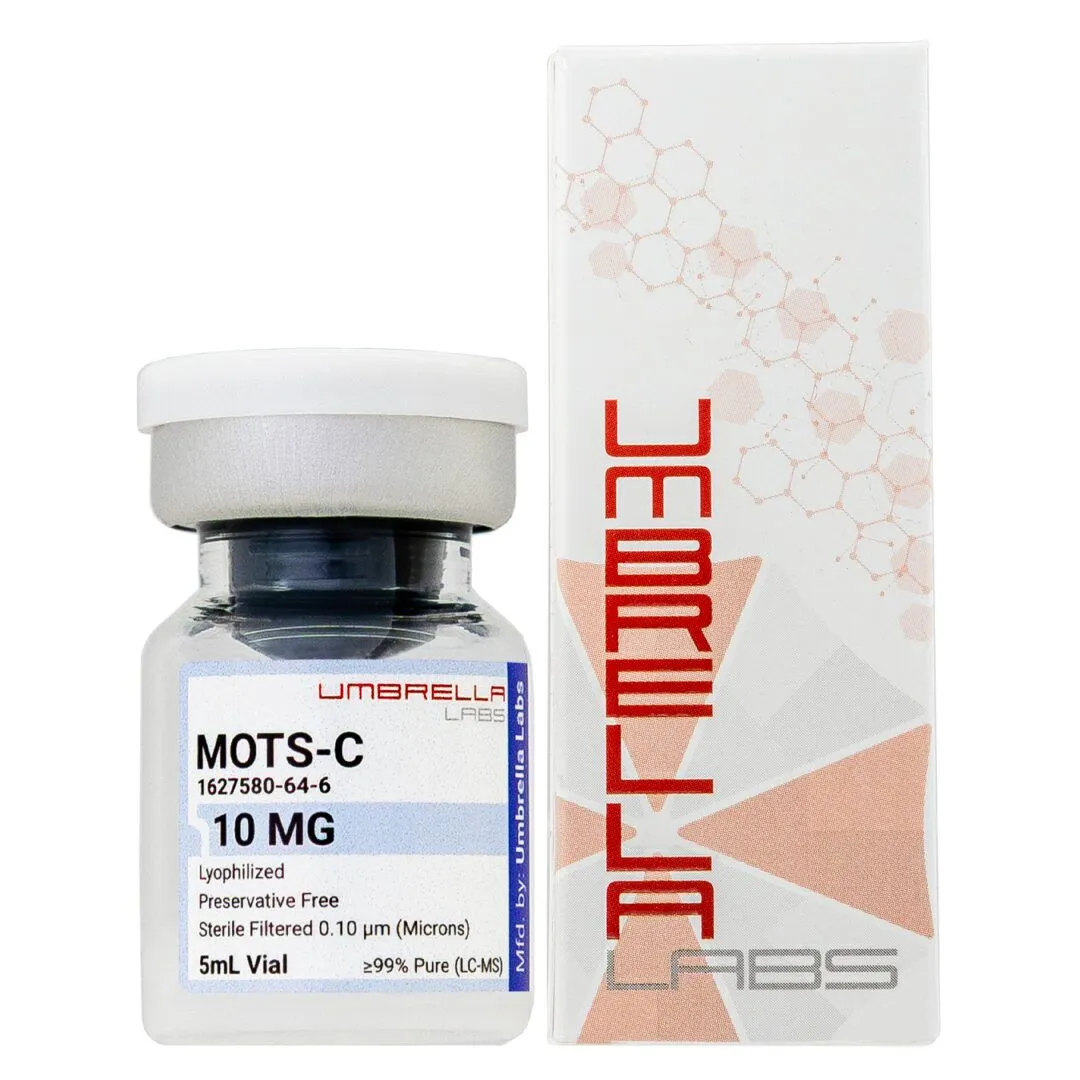


MOTS-C Peptide 10mg Vial | High Purity Mitochondrial Peptide for Research
MOTS-C peptide is a mitochondrial-derived peptide that has gained growing attention in modern metabolic and longevity research. Available in a frasco de 10 mg, MOTS-C is studied for its potential influence on cellular metabolism, energy regulation, and metabolic signaling pathways.
Discovered as a peptide encoded within mitochondrial DNA, MOTS-C plays a unique role in how cells respond to metabolic stress and energy demands. Researchers are particularly interested in its relationship with glucose metabolism, mitochondrial function, and cellular adaptation to stress. Because mitochondria are often referred to as the “powerhouse” of the cell, peptides like MOTS-C may provide valuable insights into how energy production and metabolic health are regulated at the cellular level.
In laboratory environments, MOTS-C is frequently examined in studies exploring metabolic balance, exercise physiology, aging biology, and cellular resilience. Its emerging role in mitochondrial communication and metabolic signaling continues to make it an exciting area of peptide research.
Cada MOTS-C peptide vial se produce bajo estándares de laboratorio controlados para garantizar high purity, stability, and consistency for research use.
| Número CAS | 1627580-64-6 |
| Otros nombres | UNII-A5CV6JFB78, MOTS-c (human) (trifluoroacetate salt), A5CV6JFB78 |
| Nombre IUPAC | (4S)-4-[[(2S)-5-amino-2-[[(2S)-2-[[(2S)-2-[[(2S)-2-amino-4-methylsulfanylbutanoyl]amino]-5-carbamimidamidopentanoyl]amino]-3-(1H-indol-3-yl)propanoyl]amino]-5-oxopentanoyl]amino]-5-[[(2S)-1-[[2-[[(2S)-1-[[(2S,3S)-1-[[(2S)-1-[[(2S)-1-[(2S)-2-[[(2S)-1-[[(2S)-6-amino-1-[[(2S)-1-[[(1S)-4-carbamimidamido-1-carboxybutyl]amino]-4-methyl-1-oxopentan-2-yl]amino]-1-oxohexan-2-yl]amino]-5-carbamimidamido-1-oxopentan-2-yl]carbamoyl]pyrrolidin-1-yl]-3-(4-hydroxyphenyl)-1-oxopropan-2-yl]amino]-1-oxo-3-phenylpropan-2-yl]amino]-3-methyl-1-oxopentan-2-yl]amino]-3-(4-hydroxyphenyl)-1-oxopropan-2-yl]amino]-2-oxoethyl]amino]-4-methylsulfanyl-1-oxobutan-2-yl]amino]-5-oxopentanoic acid |
| Fórmula molecular | C₁₀₁H₁₅₂N₂₈O₂₂S₂ |
| Peso molecular | 2174.6 |
| Pureza | ≥99% Puro (LC-MS) |
| Disponibilidad de líquido | N/A |
| Disponibilidad de polvo | Vial de 10 miligramos (liofilizado) |
| Condición de almacenamiento | Consérvese en frío, manténgase refrigerado. NO congelar. |
| Términos | Todos los productos son exclusivamente para uso en investigación y desarrollo de laboratorios. Los productos no son aptos para el consumo humano. |
What Is MOTS-C Peptide?
MOTS-C is a mitochondrial-derived peptide encoded by mitochondrial DNA that plays a role in regulating cellular energy metabolism and metabolic signaling pathways.
Why Researchers Study MOTS-C
Cellular Energy Regulation
Researchers study MOTS-C for its potential role in regulating energy balance and metabolic activity at the cellular level.
Metabolic and Glucose Research
The peptide is often examined in studies focused on glucose metabolism and metabolic efficiency.
Ciencia del envejecimiento y la longevidad
Scientists also investigate MOTS-C in research related to mitochondrial health, aging biology, and cellular resilience.
Calidad y pureza del producto
Cada MOTS-C 10mg peptide vial is manufactured under strict laboratory conditions to ensure alta pureza, estabilidad y consistencia de grado de investigación.
Preguntas Frecuentes (FAQ)
What is MOTS-C peptide used for in research?
MOTS-C is commonly studied for its role in metabolic regulation, mitochondrial function, and cellular energy pathways.
Why is MOTS-C important in peptide research?
Researchers are interested in MOTS-C because it is derived from mitochondrial DNA and may influence metabolism and cellular stress responses.
What makes MOTS-C different from other peptides?
Unlike many peptides, MOTS-C is encoded by mitochondrial DNA, linking it directly to cellular energy production and metabolic signaling.
How should MOTS-C peptide be stored?
Los péptidos deben conservarse en un ambiente fresco y seco, y tras su reconstitución suelen ser refrigerado para mantener la estabilidad.
Sé el primero en valorar “MOTS-C Peptide 10mg Vial”
Productos relacionados

Umbrella Labs

Umbrella Labs


Umbrella Labs
Umbrella Labs


Valoraciones
No hay valoraciones aún.