
Buy Fentanyl online
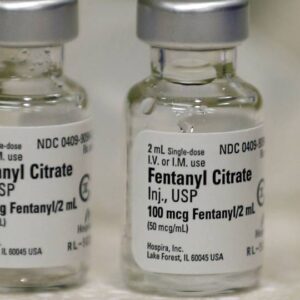
Fentanyl citrate is a potent opioid agonist with a standard IV dose of 100 μg providing the analgesic equivalent of 10 mg of morphine. Fentanyl has a 3-compartment pharmacokinetic profile, with distribution taking 1.7 minutes, redistribution taking 13 minutes, and a terminal elimination half-time of 219 minutes. The volume of distribution is 4 L/kg, and plasma protein binding increases with increased ionization of the drug. Fentanyl is primarily transformed in the liver, with a high first-pass clearance.14
The onset of action of the drug is almost immediate, but the maximal respiratory depressant and analgesic effects may not be noted for several minutes. The usual duration of action of a 1-time, 100-μg dose is 30 to 60 minutes; however, the respiratory depressant effects may outlast the duration of the analgesic effect. The peak respiratory effect is noted 5 to 15 minutes after administration of a single injection. However, decreased sensitivity to CO2 stimulation can persist longer than the depression of respiratory rate associated with a single dose.14 This is an important consideration when selecting pain medications, especially as the patient undergoes spontaneous breathing trials (SBTs) close to meeting criteria for extubation.
Because of the significant respiratory effects, the primary indication for fentanyl administration is listed for the operative encounter, because it should be administered only by trained personnel in a monitored setting. Thus, the SCCM has created guidelines for unlabeled dosing, specifically for critically ill patients in an ICU. Those without mechanical ventilation may receive a slow IV bolus of 25 to 35 μg (based on an ideal body weight of 70 kg) or 0.35 to 0.5 μg/kg every 30 to 60 minutes. Continuous IV infusions may be instituted for mechanically ventilated patients with doses ranging from 50 to 700 μg/h or 0.7 to 10 μg/kg/h.1,15
Respiratory depression, apnea, chest wall rigidity, and bradycardia are the serious adverse reactions associated with fentanyl, which can lead to respiratory arrest and circulatory depression and result in cardiac arrest. Hypertension, hypotension, dizziness, blurred vision, nausea, emesis, laryngospasm, and diaphoresis may also occur. Precautions should be taken in patients with chronic obstructive pulmonary disease, low respiratory reserve, impaired hepatic and renal function, and cardiac bradyarrythmias, because these conditions can all be exacerbated by fentanyl administration.
How to Take Fentanyl Citrate
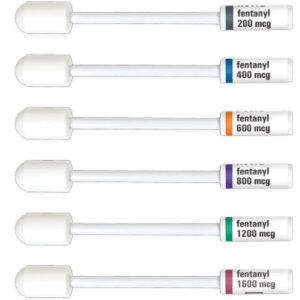
Fentanyl citrate delivers pain relief using a lozenge that is attached to a handle and dissolves as patients move it along the inside of their cheeks. The fentanyl citrate unit should be sucked, not chewed. The drug should be consumed over a 15 minute period. You should not eat or drink during this 15 minute period. You also should not bite or chew the lozenge as that will diminish the effect of the medication.
It is important to make sure you are taking the correct amount of medication every time. Before every dose, check that what you are taking matches what you have been prescribed. You should also not replace one type of fentanyl for another. Take only what you have been prescribed.
This medication can interact with other medications that depress the central nervous system like barbituates (including phenobarbital), tranquilizers (including Haldol®, Librium®, and Xanax ®), other narcotics, and general anesthetics. The blood levels of this medication can be affected by certain foods and medications, so they may require dose adjustment or should be avoided. These include: grapefruit, grapefruit juice, verapamil, ketoconazole, rifampin, phenytoin, St. John’s wort, and modafinil. Be sure to tell your healthcare provider about all medications and supplements you take.
DO NOT share this medication or give it to someone else, as severe breathing problems and death can occur.
This medication can cause dizziness, sleepiness, and confusion. You should not drive or operate machinery while taking this medication until you know how it will affect you.
Storage and Handling
Store this medication at room temperature in the original container. Due to the risk of diversion (someone else taking your narcotic medication to obtain a high, rather than for symptom relief), you may want to consider keeping your medication in a lock box or other secure location. After you have used the medication and the medication is totally dissolved, throw away the handle in a trash container that is out of the reach of children. If any of the drug matrix (lozenge) remains on the handle, place the handle under hot running tap water until all of the drug is dissolved, and then dispose of the handle in a place that is out of the reach of children. Keep this medication out of reach of children and pets.
To prevent someone from accidentally taking this medication, it should be disposed of when no longer needed through a medicine take-back program or by dropping them off at a DEA-authorized collector. For locations near you, check www.dea.org. Ask your pharmacist or care team for assistance in the disposal of unused medications. If you cannot use these options, you can flush these medicines down the toilet as soon as they are no longer needed. Remove the medication from the blister package using scissors and hold it by the handle over the toilet. Use wire-cutting pliers to cut the drug matrix from the handle and let it fall into the toilet. Flush the toilet twice after 5 units have been put into the toilet. Dispose of the handles in a place that is out of reach of children and pets.
Where do I get this medication?
Fentanyl citrate is available through retail/mail-order pharmacies. Your oncology team will work with your prescription drug plan to identify an in-network retail/mail-order pharmacy for medication distribution. Mail order delivery must be hand delivered and signed for. This medication cannot be “called in” or electronically prescribed to your local pharmacy; you must provide the original prescription to the pharmacist. Many pharmacies do not keep this medication in stock but will order it for you. There may be a delay in availability, so plan prescription refills accordingly.
This medication requires the patient, prescriber, and pharmacist enrollment in the TIRF-REMS program (risk evaluation and mediation program). The purpose of this program is to provide education to patients, caregivers, and providers to reduce the risk of misuse, abuse, addiction, and overdose. You or your caregiver will be required to read and sign a patient-prescriber agreement form before you can start treatment with this medication.
Insurance Information
This medication may be covered under your prescription drug plan. Patient assistance may be available to qualifying individuals without prescription drug coverage. Co-pay cards, which reduce the patient’s co-pay responsibility for eligible commercially (non-government sponsored) insured patients, are also offered by the manufacturer. Your insurance company may require you to utilize other narcotic pain medications prior to authorizing a prescription for fentanyl citrate. This is called step therapy. Due to the risk of diversion and misuse, the quantity of medication you receive may be limited to a 2 week or 1 month supply.
Possible Side Effects of Fentanyl Citrate
There are a number of things you can do to manage the side effects of fentanyl citrate. Talk to your care team about these recommendations. They can help you decide what will work best for you. These are some of the most common or important side effects:
Slowed Breathing or Low Blood Pressure
You may experience low blood pressure or slowed breathing while taking an opioid pain medication. This usually only occurs when the dose of medication is too high or it is increased too quickly. This rarely happens to patients who have been taking opioid medications for a long time.
These side effects can also result from an overdose of opioids. If you suspect that you or someone you know has taken an overdose of opioids, call 911 immediately. If you feel extremely tired, lightheaded, dizzy, sweaty, nauseated, or short of breath, you need to seek care immediately. Sometimes patients who have taken too much opioid medication will be so sleepy that they can’t be awakened or aroused. These side effects are emergency situations. If any of these symptoms occur, you should seek emergency medical attention.
Sleepiness (Somnolence)
Feeling sleepy, drowsy, or lightheaded may accompany the use of opioid pain medication. Some people just don’t “feel like themselves” on these medications. Avoid driving or any other potentially dangerous tasks that require your concentration and a clear head until you feel normal again. Avoid alcohol or other sedatives while using these medications unless they are specifically prescribed by your care team. Most people will begin to feel like themselves after a few days on the medications. If you continue to feel “out of it” after a couple of days, talk to your healthcare provider about adjusting your dosages.
Nausea and/or Vomiting
Nausea, with or without vomiting, can be a side effect of opioid pain medications. For some patients, it lasts just a few days to weeks after starting the medication, but for some, it is a long-term side effect. Nausea and vomiting can interfere with pain management if the nausea and/or vomiting affects the patient’s ability to take the medication. You may find that eating or not eating when taking this medication may be helpful for you. Talk to your healthcare team so they can prescribe medications to help you manage nausea and vomiting.
Constipation Caused by Pain Medications
Constipation is a very common side effect of pain medications that continues as long as you are taking the medications. This side effect can often be managed well with the following preventative measures:
- Drinking 8-10 glasses of water a day. Warm or hot fluids can be helpful.
- Increasing physical activity when possible.
- Attempting a bowel movement at the same time each day.
- Eating plenty of fruits and vegetables.
- Four ounces of prune juice or 3-4 dried prunes/plums can help promote bowel movements.
- However, high fiber foods (ex. bran flakes, high fiber cereals) and fiber supplements (such as Metamucil) can actually make constipation from pain medications worse and should be avoided.
Your care team may recommend a bowel regimen, using stool softeners and/or laxatives, to prevent or treat constipation. Stool softeners (such as docusate sodium or Colace) work by bringing water into the stool, making it softer and easier to pass. A stimulant or laxative (such as Dulcolax (bisacodyl) or Senakot (senna)) works by stimulating the movements of stool through the bowel. Your provider may recommend Miralax (Polyethylene glycol 3350), which is an osmotic laxative. It works by causing water to be retained in the stool, softening the stool so it is easier to pass. These medications can be taken together. Untreated constipation can lead to a bowel blockage, so be sure to notify your healthcare team if you do not have a bowel movement for 3 or more days.
Fentanyl

Fentanyl

Fentanyl