
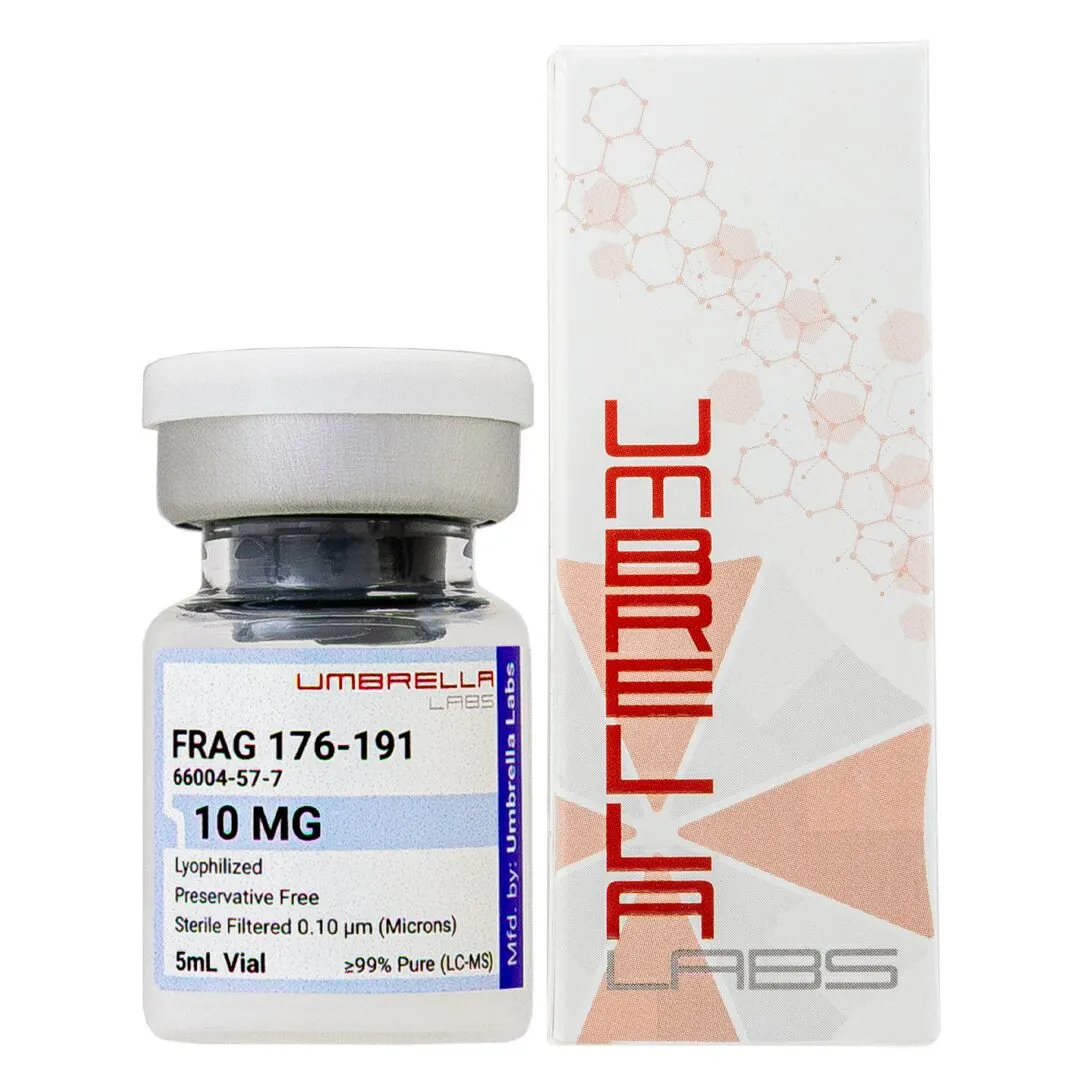
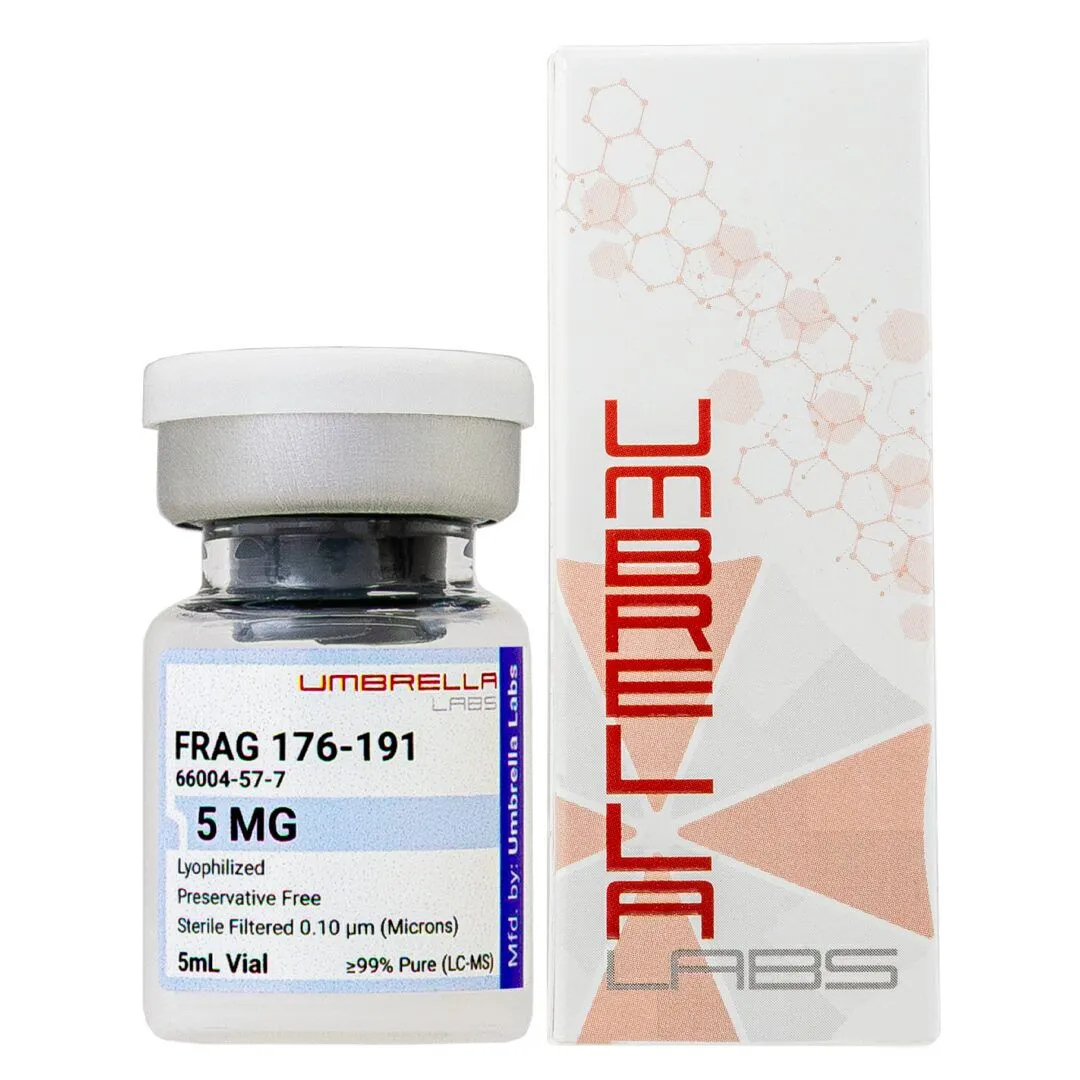
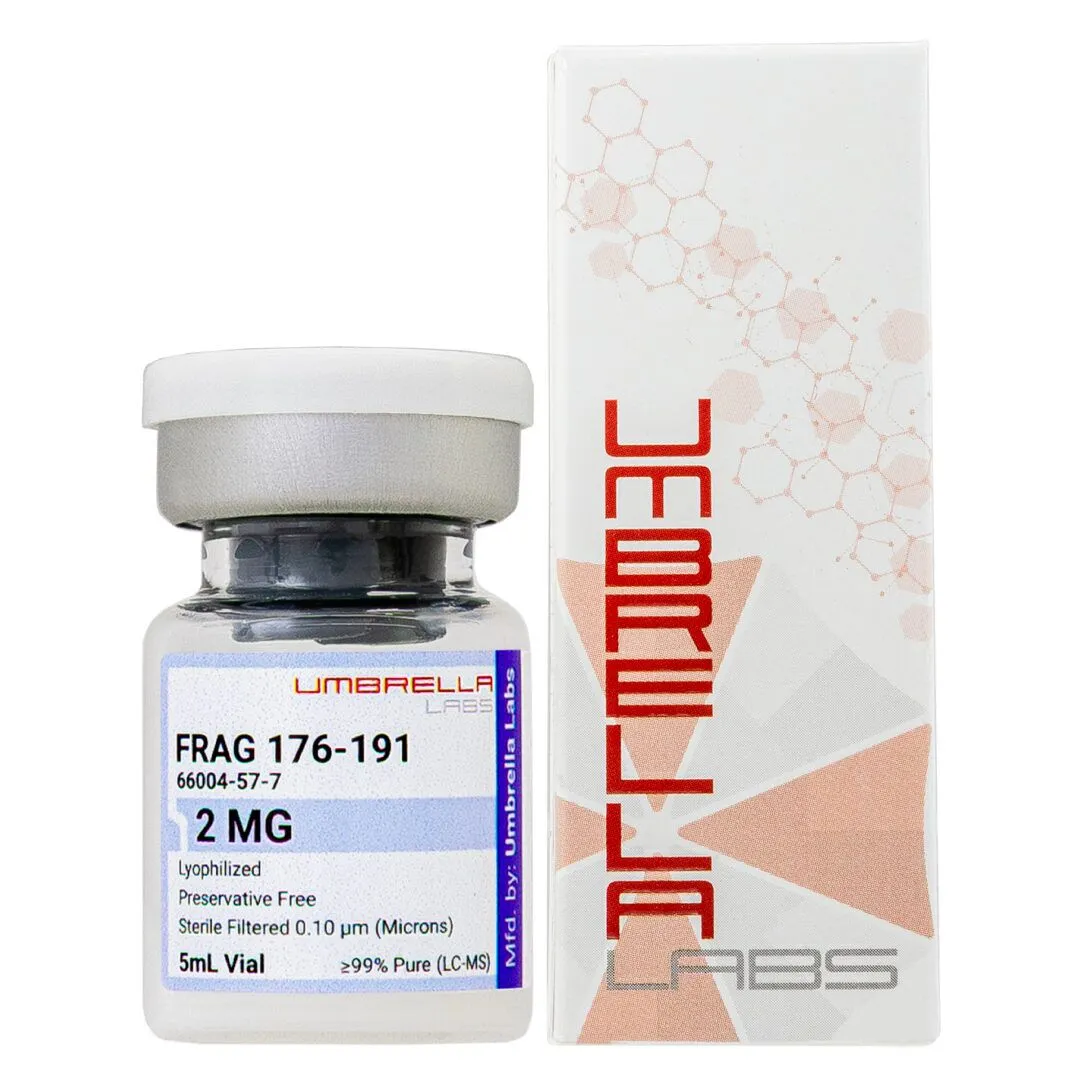
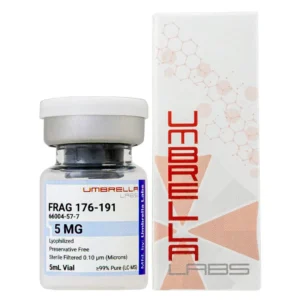
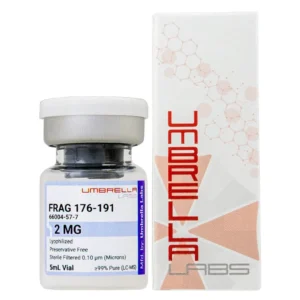
Fragment 176-191 Peptide 2mg / 5mg / 10mg Vial
Prisintervall: €26.99 till €76.99
Fragment 176-191 is sold for laboratory research use only. Terms of sale apply. Not for human consumption, nor medical, veterinary, or household uses. Please familiarize yourself with our Terms & Conditions prior to ordering.
HGH Fragment 176-191 Peptide 2mg / 5mg / 10mg Vial | High Purity for Research
Fragment 176-191 peptide is a synthetic fragment derived from the human growth hormone (HGH) molecule, specifically designed to study metabolic and fat metabolism pathways. Available in 2mg, 5mg, and 10mg vials, this peptide has become a popular compound in research focused on lipolysis, metabolic activity, and body composition biology. Fragment 176-191 Peptide 2mg / 5mg / 10mg Vial
Unlike full-length growth hormone, Fragment 176-191 is engineered to target the fat metabolism region of the HGH molecule without strongly influencing other growth hormone functions. Because of this selective design, researchers frequently explore this peptide in laboratory settings studying fat breakdown, energy utilization, and metabolic regulation.
In scientific environments, Fragment 176-191 is often examined for its potential interaction with lipolytic pathways, which are responsible for the breakdown of stored fat into usable energy. Its targeted mechanism allows researchers to investigate metabolic processes without introducing the broader systemic effects associated with full growth hormone.
Each Fragment 176-191 peptide vial is produced under strict laboratory standards to ensure high purity, stability, and consistent research quality.
| CAS-nummer | 66004-57-7 |
| Andra namn | Somatotropin (176-191), DTXSID10216216, L-Phenylalanine, L-phenylalanyl-L-leucyl-L-arginyl-L-isoleucyl-L-valyl-L-glutaminyl-L-cysteinyl-L-arginyl-L-seryl-L-valyl-L-alpha-glutamylglycyl-L-seryl-L-cysteinylglycyl-, cyclic (7-14)-disulfide |
| IUPAC-namn | [(2S)-2-[[(2S,3S)-2-[[(2S)-2-[[(2S)-2-[[(2S)-2-amino-3-phenylpropanoyl]amino]-4-methylpentanoyl]amino]-5-carbamimidamidopentanoyl]amino]-3-methylpentanoyl]amino]-3-methylbutanoyl] (4S)-5-[[2-[(2S)-2-[[2-[[(2R)-2-[[(2S)-2-amino-3-hydroxypropanoyl]amino]-3-sulfanylpropanoyl]amino]acetyl]amino]-3-phenylpropanoyl]oxy-2-oxoethyl]amino]-4-[[(2S)-2-[[(2S)-2-[[(2S)-5-carbamimidamido-2-[[(2R)-2-[[(2S)-2,5-diamino-5-oxopentanoyl]amino]-3-sulfanylidenepropanoyl]amino]pentanoyl]amino]-3-hydroxypropanoyl]amino]-3-methylbutanoyl]amino]-5-oxopentanoate |
| Molekylformel | C₇₈H₁₂₅N₂₃O₂₃S₂ |
| Molekylvikt | 1812.12 |
| Renhet | ≥99% Pure (LC-MS) |
| Tillgång på vätska | Ej tillämpligt |
| Pulvertillgänglighet | 2 milligrams vial, 5 milligrams vial, 10 milligrams vial (lyophilized/freeze-dried) |
| Förvaringsförhållande | Förvara svalt, förvaras i kylskåp. Får EJ frysas. |
| Villkor | Alla produkter är endast avsedda för användning inom laboratorieutveckling och forskning. Produkterna är inte avsedda för mänsklig konsumtion. |
What Is Fragment 176-191 Peptide?
Fragment 176-191 is a modified peptide fragment of human growth hormone designed to study fat metabolism and lipolysis-related biological pathways. Fragment 176-191 Peptide 2mg / 5mg / 10mg Vial
Why Researchers Study Fragment 176-191
Fat Metabolism Research
Researchers explore how Fragment 176-191 may influence lipolysis and fat breakdown mechanisms.
Metabolic Regulation Studies
The peptide is often examined in research focused on energy utilization and metabolic signaling.
Body Composition Biology
Scientists study Fragment 176-191 to better understand how fat metabolism impacts overall body composition and metabolic health.
Product Quality and Purity
Each Fragment 176-191 peptide vial is manufactured in controlled laboratory environments to maintain high purity, stability, and research-grade consistency.
Frequently Asked Questions (FAQ)
What is Fragment 176-191 peptide used for in research?
Fragment 176-191 is commonly studied for its potential role in fat metabolism, lipolysis, and metabolic pathway research.
How is Fragment 176-191 different from human growth hormone?
It is a specific fragment of HGH designed to target fat metabolism pathways without replicating all growth hormone effects.
Why is Fragment 176-191 popular in metabolic studies?
Researchers value it for studying lipolysis and energy metabolism in controlled research environments.
How should Fragment 176-191 peptides be stored?
Peptides should be stored in a cool, dry place, and after reconstitution they are typically refrigerated to maintain stability.
| Quantity | 2 Milligrams, 5 Milligrams, 10 Milligrams |
|---|
Bli först med att recensera ”Fragment 176-191 Peptide 2mg / 5mg / 10mg Vial”
Relaterade produkter
Umbrella Labs
Umbrella Labs
Umbrella Labs
Umbrella Labs

Umbrella Labs
Recensioner
Det finns inga recensioner än.